There was a time in seminary when I thought I was doing everything right.
I was reading the Bible every day, memorizing verses, studying Greek and Hebrew, learning hermeneutics, and writing papers on theology. I was surrounded by Scripture, but somehow, I felt disconnected from God.
Looking back, I realize I was studying the Word for a grade instead of for His glory. I was chasing understanding instead of intimacy. My worship had become routine, structured, disciplined, even impressive from the outside but hollow inside.
When I read Jeremiah 7, it felt like God was holding up a mirror. The people of Judah were going through the motions, showing up at the temple, offering sacrifices, saying all the right things. But God saw through it. Their hearts were far from Him. In this blog, I want to introduce ten ideas that capture the essence of this chapter.
“Do not trust in deceptive words and say, ‘This is the temple of the Lord, the temple of the Lord, the temple of the Lord!’” — Jeremiah 7:4
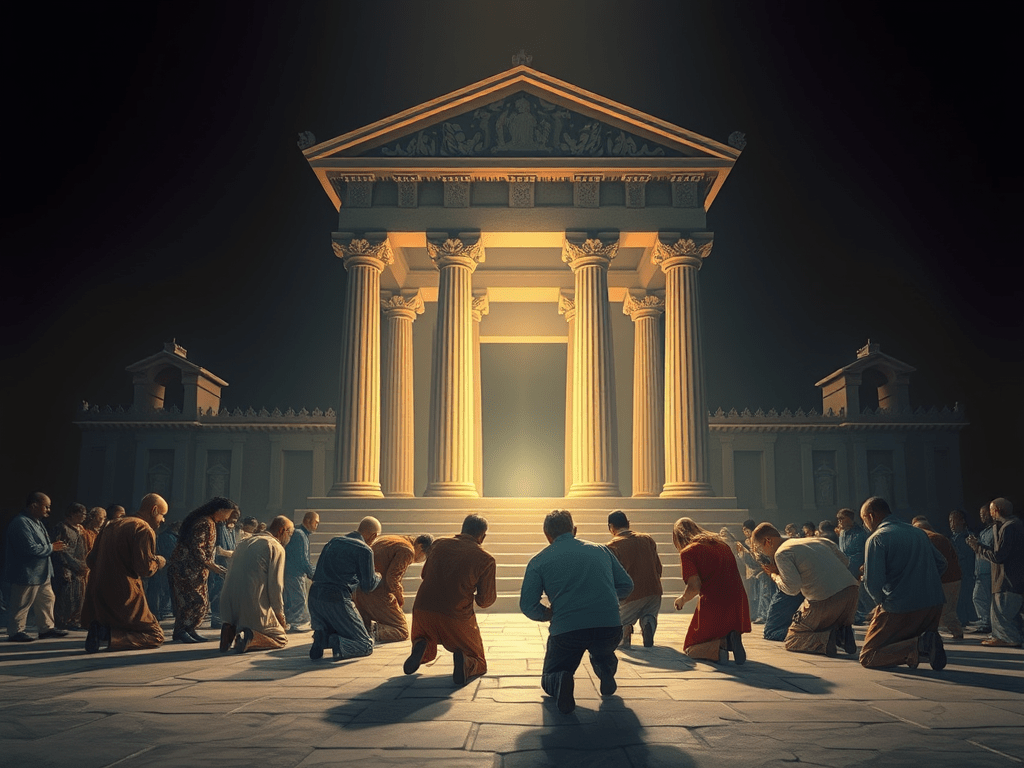
1. The Illusion of the Temple
Jeremiah’s message begins at the gate of the temple, the very place people went to feel spiritual. They believed the temple itself would protect them, that God’s presence was tied to a building.
But God wasn’t impressed by their attendance. He was looking for obedience, not appearances.
That verse reminds me of the time I realized how easy it is to substitute activity for connection. My “temple” wasn’t a building, it was accomplishment. I thought as long as I was busy doing good things, I was spiritually secure.
In our culture, the modern temple can take many forms: career success, financial stability, or even religious performance. For others, it’s social media—our digital sanctuary where we post our highlight reels and hope people see how “put-together” we are.
We curate our lives to look blessed, even when we’re spiritually dry. We become like Judah—trusting in an illusion of godliness instead of the reality of God’s presence.
2. When Worship Becomes Routine
The people of Judah came to worship faithfully, but God said their offerings were meaningless because their lives didn’t match their words.
“Will you steal and murder, commit adultery and perjury… and then come and stand before me in this house, which bears my name, and say, ‘We are safe’—safe to do all these detestable things?” — Jeremiah 7:9-10
That’s what religion without repentance looks like, saying the right words but keeping the same heart.
During seminary, I could translate verbs in Greek but couldn’t translate my knowledge into obedience. I knew theology but lacked tenderness. I could quote verses on grace but had forgotten what grace felt like.
It’s possible to love learning about God more than loving God Himself.
Worship becomes routine when we forget why we started in the first place. It’s like walking through a house you once dreamed of building, now just checking boxes for maintenance. The beauty fades when the heart isn’t engaged.
3. True Repentance: A Change of Mind and Heart
In Jeremiah 7:5-7, God gives the people the remedy:
“If you really change your ways and your actions and deal with each other justly… then I will let you live in this place.”
Repentance isn’t about words, it’s about change. It’s not a moment of guilt but a movement of grace.
To me, repentance means learning to think of others more highly than myself. It’s putting my family’s needs before my own. It’s learning to listen instead of lecture, to serve instead of control.
Every time I choose to spend time helping my kids instead of scrolling, or to encourage my wife instead of focusing on my to-do list, I feel closer to the heart of God. That’s repentance in motion, a change of mind that leads to action.
One vivid image comes to mind: a potter at the wheel. When a clay pot becomes lopsided, the potter doesn’t throw it away. He reshapes it. The spinning doesn’t stop, it’s the potter’s hands that bring the clay back into form.
That’s what God does through repentance. He doesn’t discard us for being misshapen. He presses gently, firmly, lovingly—until our hearts align again with His.
4. The False Temple of Image
In Jeremiah’s day, people trusted the temple more than God. In our day, we often trust our image more than integrity.
Social media can become our modern sanctuary, a place where we worship the god of self-presentation. We post our wins, our vacations, our faith moments, but rarely our doubts, fears, or failures.
It’s not that social media is evil; it’s that it feeds our desire to appear whole without actually being healed.
I’ve fallen into that trap, too. There have been seasons when I’ve looked at my life through the lens of public perception—what people might think about my success or my spiritual life—instead of through the eyes of God.
Jeremiah’s message cuts through that illusion. God doesn’t dwell in likes, follows, or flawless photos. He dwells in contrite hearts.
If Jeremiah were preaching today, he might stand at the “temple gates” of our digital world and say, “Stop trusting in deceptive posts that cannot save you.”
5. Hearing God in the Silence
God says in Jeremiah 7:23,
“Obey my voice, and I will be your God, and you will be my people.”
That verse is simple, but it’s the essence of relationship: listen and follow.
For me, God speaks most clearly when I write. Writing has always been my way of hearing Him. It’s how my thoughts settle, how my heart quiets down long enough to recognize His voice again.
Sometimes the words flow like a river; other times, they come slowly, like drops from a leaky faucet. But each time, I sense His presence—guiding, convicting, comforting.
Writing is how I turn the noise of life into prayer. It’s how I move from information to transformation.
When Judah stopped listening, they lost their way. When I stop writing—when I stop expressing my heart before God—I lose mine too.
6. Stubborn Hearts and Gentle Grace
The end of Jeremiah 7 is sobering. God says, “Truth has perished; it has vanished from their lips.” The people had become hardened, refusing correction.
I know what that feels like. There are times I’ve resisted God’s nudges because I thought I knew better. Times I’ve justified pride, impatience, or selfishness.
But every time I get stubborn, God reminds me of His mercy. I look back on the countless times He’s forgiven me—and that remembrance softens me.
It’s hard to stay angry at a God who’s been nothing but gracious.
When I remember His patience—how He waited for me when I drifted, how He restored me when I repented—it humbles me. It pulls me out of self-pity and back into gratitude.
Grace doesn’t excuse sin; it exposes love. It’s what turns rebellion into renewal.
7. Living Authentically Before God
Jeremiah’s message wasn’t just for ancient Israel—it’s for us. God isn’t impressed by attendance, titles, or outward success. He’s after authenticity.
He wants worship that flows from the heart, not habit. He wants repentance that produces compassion, not condemnation.
The false temple can crumble in many ways. It can be career obsession, intellectual pride, or even ministry itself. But when it does, what remains is often purer—a faith stripped of performance, built on presence.
For me, that means letting go of image management and choosing inner renewal. It means letting my faith show up in how I treat people, not just what I post online.
It means remembering that obedience is worship, service is sacrifice, and humility is holiness.
8. The Potter’s Touch
Imagine again the potter’s wheel. The clay spins endlessly, pressed and reshaped by steady hands. If the clay resists, it cracks. But if it yields, it becomes something beautiful.
Jeremiah later uses that same imagery in chapter 18, but the spirit of it starts here in chapter 7—God forming a people who would listen, love, and live authentically.
I want to be that clay. Soft, pliable, willing to be reshaped.
Because at the end of the day, God isn’t asking me to be perfect—just responsive. He doesn’t want my resume; He wants my repentance.
9. A Closing Prayer
Lord, forgive me for the times I’ve trusted in the temple of appearance instead of the power of Your presence.
Forgive me for studying You like a subject instead of seeking You as my Savior.
Break the patterns of routine worship in me and renew the joy of real relationship.
Teach me to listen again, to serve others above myself, to love You not with words but with obedience.Strip away the false temples in my life—my pride, my image, my distractions—and replace them with a heart of flesh.
Like clay in the potter’s hands, reshape me until I reflect Your character and rest in Your grace.
In Jesus’ name, Amen.
10. Final Reflection
Jeremiah 7 reminds us that God doesn’t live in temples made by human hands—He lives in hearts made humble by grace.
When worship becomes routine, return to relationship. When image overshadows intimacy, come back to authenticity. When religion feels dry, rediscover repentance.
The false temple will always crumble, but the living God remains. And He’s still calling—inviting us to stop performing and start walking with Him again.


I greet you all, body of Christ. My name is Sophie, and I am from South Africa. I completely agree with this perspective. I realize that I have often treated the church as a routine place to check in, marking my attendance rather than truly worshipping in spirit and in truth.
LikeLike
Thanks for sharing about what God is doing in your life. Blessings to you!
LikeLike