Then I fell at his feet to worship him, but he said to me, “Do not do that; I am a fellow servant of yours and your brothers and sisters who hold the testimony of Jesus. Worship God! For the testimony of Jesus is the spirit of prophecy” (Rev. 19:10).
What a powerful verse to begin this section. John is showing his extreme reverence for an angel–who is likely full of power and beauty. Yet, the angel gently rebukes John by saying not to worship him but to God alone be the glory. John should know better to worship a mere mortal.
The Greek word here is pipto πίπτω, meaning to fall, and reveals John’s prostration, and proskuneo emphasizes worship that is only meant to be reserved for the divine. John should have known this–that the Lord is one, and to only worship Him (Ex. 20:3-5; Matt. 4:10). It could have been that he was caught up in the moment, not realizing that the being he saw was merely an angel.
After the angel rebukes John, he says the testimony of Jesus is the spirit of prophecy. What exactly does that mean? It emphasizes the reliance we must have on God’s law and the testimony for discerning truth from others. Isaiah 8:20 states: “To the law and to the testimony. If they do not speak according to this word, it is because they have no dawn.”
This means that if someone is not speaking from the testimony of Jesus, they have no dawn or spiritual light and understanding. Dawn represents the coming of light after darkness (Ps. 119:105; Jn 1:4-5) which is pertinent in the end times, where there is darkness all around. Moreover, the angel’s self-identification as a fellow servant highlights the equality of all who serve God, including angels, emphasizing the role as ministering spirits (Heb. 1:14).
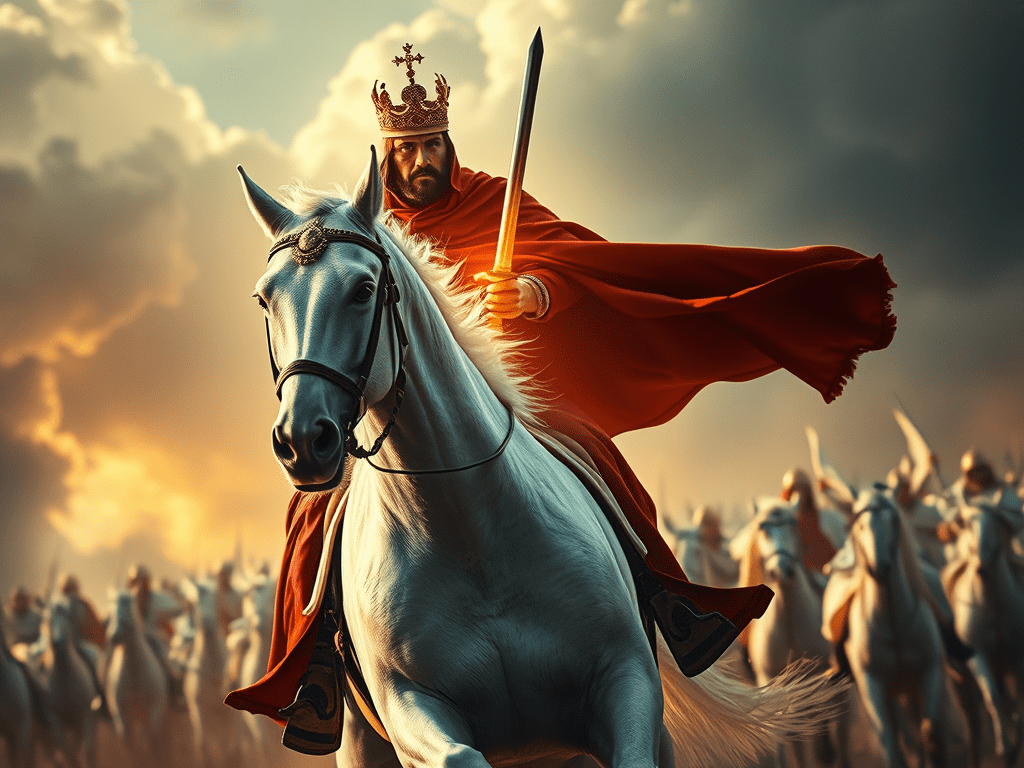
And I saw heaven opened, and behold, a white horse, and He who sat on it is called Faithful and True, and in righteousness He judges and wages war (Rev. 19:11).
The heaven opened phrase here reveals a dramatic apocalyptic moment that corresponds with Ezekiel 1:1 and Matthew 3:16. The verb here ἠνεῳγμένος reveals a completed and during action–heaven has been opened permanently to reveal divine action. What a powerful moment to show the glorious truth of Jesus (Heb. 10:19-20).
This passage also talks about the white horse, which signifies purity, victory, and divine authority. For the one who sits on the horse is called Faithful and True–this of course being the King of kings and the Lord of Lords. This horse symbolizes warfare but most importantly that it will triumph over evil (Rev. 6:2).
The word in the Greek for truth is Ἀληθινός, which contrasts itself with the falsehood of the beast and the deceit of Satan (Jn. 8:44). Satan is the Father of lies, and Jesus is the Son of Man, whose Father is the author of truth. Furthermore, God always fulfills his promise as a faithful, making covenants with His people and keeping those oaths (2 Tim. 2:13; 1 Thess. 5:24).
The phrase here “and in righteousness He judges and wages war” is a fulfillment of prophecy from Isaiah 11:3-4, which describes the Messiah as judging with equity and righteousness.
Here is Isaiah 11:3-4:
“And His delight is in the fear of the Lord,
And He shall not judge by the sight of His eyes,
Nor decide by the hearing of His ears;
But with righteousness He shall judge the poor,
And decide with equity for the meek of the earth;
He shall strike the earth with the rod of His mouth,
And with the breath of His lips He shall slay the wicked.” (Isaiah 11:3-4, NKJV)
There are several other verses that talk about God’s righteous judgment. Psalm 45:4 says in your majesty ride on victoriously for the cause of truth and meekness and righteousness. Furthermore, Matthew 24:30 states: “Then the sign of the Son of Man will appear in heaven, and all the tribes of the earth will mourn.” This is all a testimony that Christ’s waging war is not about physical violence but a spiritual battle against sin, death, and the powers of darkness (Eph. 6:12; Col. 2:15). Praise be to God!
His eyes are a flame of fire, and on His head are many crowns; and He has a name written on Him which no one knows except Himself (Rev. 19:12).
God’s eyes are a flame of fire is so powerful because it signifies His penetrating, discerning vision. He is omnipotent and omniscient. There is nothing that he doesn’t see, and the idea is that his eyes can pierce through any sort of deception or evil (Dan. 10:6; Rev. 1:14). Daniel 10:6 states: “His body was like beryl, his face like lightning, his eyes like flaming torches, his arms and legs like the gleam of burnished bronze, and the sound of his words like the roar of a multitude.”
Additionally, in biblical imagery, fire can symbolize God’s holiness. Exodus 3:2 exclaims: “The angel of the Lord appeared to him in flames of fire from within a bush. Moses saw that though the bush was on fire it did not burn up.” We see that God is a consuming fire. Hid judgment (Mal. 3:2-3) and presence (Heb. 12:29) all emphasize his power.
Here it shows that Jesus has many crowns on his head. The plural form πολλά implies that Christ is the supreme ruler over all powers, kings, and kingdoms, from the past all the way to the future, forever and ever.
This last part has always been a mystery to me. The original statement is: καὶ ὄνομα ἐγγεγραμμένον ὃ οὐδεὶς ἴδει εἰ μὴ αὐτός, which means a name written that no one knew except himself. This speaks to God’s unique and exalted position, beyond human understanding or description. He is the necessary being and we are the contingent beings. He is the only entity in the universe that is self-existing (Isaiah 55:8-9; Rom. 11:33-36).
The many crowns challenge us to recognize Christ as the supreme authority in our lives. There are many areas in life that try to set on the throne of importance, but we must never allow those idols to get in the way of the one true God. He is worthy of complete worship and submission.
He is clothed with a robe dipped in blood, and His name is called The Word of God (Rev. 19:13).
Isaiah 63:1-3 states: “Who is this who comes from Edom, with dyed garments from Bozrah, this one who is glorious in His apparel, traveling in the greatness of His strength? “I who speak in righteousness, mighty to save.” Why is Your apparel red, and Your garments like one who treads in the winepress? “I have trodden the winepress alone, and from the peoples no one was with Me. For I have trodden them in My anger, and trampled them in My fury; their blood is sprinkled upon My garments, and I have stained all My robes.” (Isaiah 63:1-3, NKJV)
This verse provides a prophetic picture of the figure of Christ being dipped in blood, revealing him as Redeemer and the atoning sacrifice for our sins. The “blood” in both passages signifies judgment, but in Revelation, it also carries the weight of Christ’s atoning death — He is the one who bore the blood of judgment on the cross, and now He comes in glory to execute final judgment.
The Word of God here ὁ λόγος τοῦ θεοῦ is understood as the logical principle that ruled the world in Hellenistic philosophy. John’s use of the word logos revolutionizes this notion of the logic behind the universe, not as some impersonal force but rather a personal being who is Jesus Christ. Moreover, this title underscores Christ’s active role in creation (Jn. 1:3; Col. 1:16), and his present function as the final revelation of God’s purpose to mankind.
And the armies of heaven, clothed in fine linen, white and clean, were following Him on white horses (Rev. 19:14).
There will be a collective participation by all the angels and saints throughout history, as we march to stand up for the King of kings. The word for army here στρατεία, refers to a military force, not composed of earthly soldiers but a divine force that symbolizes Christ’s divine authority over the evil in this world.
Clothed in fine linen, white and clean symbolizes how the saints are to be holy and righteous. They are clean because of the atoning sacrifice of Christ, which was spoken about in the last verse. We are declared righteous by faith through the cross (Rom. 3:22-24; Philippians 3:9). Thus, the garments ultimately signify God’s grace and being clothed in the righteousness of God.
It’s important to also note that these are priestly garments. In Exodus 28:39, priests were required to wear fine linen, which symbolized holiness and their role as mediator between God and man. Now, Jesus is that high priest who fulfills the role of prophet, priest, and king. The passages that come to my mind similar to this is Isaiah 61:10, which says, “I will greatly rejoice in the Lord, my soul shall be joyful in my God; for He has clothed me with the garments of salvation, He has covered me with the robe of righteousness.”
Finally, the image of being clothed in fine linen, white and clean, is deeply connected to the wedding feast of the Lamb described in Revelation 19:7-8. The bride, the church, is described as wearing fine linen, signifying her purity and readiness for the wedding. This imagery ties the righteous clothing of the heavenly army to the broader theme of the wedding feast, where the church, having been made pure by Christ, is prepared to meet her Bridegroom. The heavenly army is essentially the “bride” in waiting, made pure and spotless through the blood of Christ, ready for the fulfillment of God’s kingdom.
From His mouth comes a sharp sword, so that with it He may strike down the nations, and He will rule them with a rod of iron; and He treads the winepress of the fierce wrath of God, the Almighty (Rev. 19:15).
What a trepidation of a passage here! The Greek phrase here for out of his mouth ἐκ τοῦ στόματος αὐτοῦ highlights the significant power of God’s word, not just as speech but authoritative, giving life, bringing judgment, creation, and the execution of his divine, all-powerful will. As Scripture makes it clear, God has the power to bring life and destroy it at the same time (Gen. 1:3; Isa. 55:11).
The sharp sword shows God’s accuracy and precision. He will cut through all the lies and get to the truth, and separate the righteous from the unrighteous in the final judgment (Heb. 4:12). Moreover, when the word says it will strike the nations, it’s fulfilling Psalm 2:9, where it speaks of the Messiah striking the nations with a rod of iron. It’s clear that God is bringing all things to fruition from the prophets of old to in the book of Revelation.
Treading the winepress is another metaphor of judgment. Back in Hebrew culture, crushing grapes in a winepress would often symbolize the wrath of God because the Lord would crush the enemies underfoot, just like stepping on grapes to make wine. And finally, this conveys the fierceness and wrath of Almighty God because it speaks to God’s ability to enact judgment without any limitations. For Scripture says it’s a fearful thing to fall into the hands of the living God (Heb. 10:31).
There are several verses that speak on this subject. Psalm 2:9 says God will break his enemies with a rod of iron and dash them top pieces like a potter’s vessel. Matthew 3:12 speaks of the messiah’s judgment: “His winnowing fork is in His hand, and He will thoroughly clear his threshing floor, and He will gather his wheat into the barn, but He will burn up the chaff with unquenchable fire. And finally, 2 Thessalonians 1:7-9 talk about how the Lord will come in flaming fire, taking vengeance on those who do not know God.” This passage should be a sobering reminder to repent and trust in Jesus.
And on His robe and on His thigh He has a name written: “KING OF KINGS, AND LORD OF LORDS” (Rev. 19:16).
The translation here can be either robe or on his vesture πὶ τῆς ἱμάτιας αὐτοῦ. It’s a type of clothing that has a robe or large outer garment–associated with God’s victorious return because it would normally be worn by a king with great power. He also had the name on his thigh, which once again shows authority because the name is emblazoned as a mark of God’s sovereign power and ultimate rule.
The Title King of kings and Lord of Lords is used often in Scripture as a title of God. This title is a superlative phrase, asserting the ultimate supremacy of Christ. The term Basileus refers to a king, and Kyrios refers to a lord or master. Both are titles of supreme authority. The phrase emphasizes that Christ is not just one ruler among many; He is the sovereign ruler over all other rulers, kings, and lords. This phrase occurs elsewhere in Scripture as a title for God (e.g., 1 Timothy 6:15, Daniel 2:47, and Revelation 17:14).
It should come as no surprise that the God of the Bible is the ultimate authority. There is not multiple gods we worship or serve, for He is the only true God. In Psalm 2:6-9, it is foretold that God will set his King on Zio, who will rule over the nations, and Daniel 7:14 also shows the Son of Man having an everlasting dominion. Hence, the term king of kings because his reign will outlast all other human kings.
Knowing that Christ is King of Kings and Lord of Lords should inspire believers to live with an eternal perspective, anticipating the fulfillment of His kingdom. It calls us to focus on eternal values rather than temporary, earthly concerns. His authority is certain, and His kingdom will be established forever. This is good news because God is omnibenevolent: He will make all things right and true justice will reign forever.
Then I saw an angel standing in the sun, and he cried out with a loud voice, saying to all the birds that fly in midheaven, “Come, assemble for the great feast of God” (Rev. 19:17).
There are several factors happening at once here. First, there is an angel standing in the sun. The angel is placed in the center of this cosmic vision, with the sun representing the power or authority (Ps. 84:11; Mal. 4:2). It could be that the angel is only a reflection of this powerful force, being an agent or eyewitness to the events that are about to unfold on the earth.
A loud voice ἔκραξεν, or crying aloud, is urging attention from everyone because now the creation is being ordered to become active in the sky. These birds will now play a key role in this apocalyptic event because they are to prepare a divine feast. The imagery of a supper also contrasts with the marriage supper of the lamb from Revelation 19:9–except this banquet is to be a severe bloodbath.
This divine judgment and the feast of the wrath goes back to Ezekiel 39:17-20, where God calls for the birds to feast on the wicked after the final battle. It also brings up Matthew 24:29: “For wheresoever the carcass is, there will the eagles be gathered together.” In other words, those who are left will be a powerful symbol of God’s judgment to all the wicked who opposed God.
Finally, this imagery really shows the finality of the event. Once the bodies are left for the birds, there really is no hope of redemption or restoration for those who are judged. It’s too late at this point because repentance has passed. It’s similar to Revelation 6:16, where the unbelievers call out to the mountains and rocks: “Fall on us and hide us from the face of him who sits on the throne and from the wrath of the lamb.”
Subscribe to get access
Read more of this content when you subscribe today.


Leave a comment