Introduction
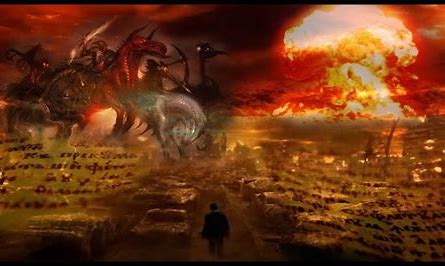
Revelation 13 stands out as a pivotal passage, introducing the ominous figure of the Beast from the Sea. In this commentary, we will delve into the verses of Revelation 13, exploring the symbolism and significance of this enigmatic creature. If you haven’t read all the other commentaries yet, you can begin here.
Revelation 13:1 (WEB) – “Then I stood on the sand of the sea. I saw a beast coming up out of the sea, having ten horns and seven heads. On his horns were ten crowns, and on his heads, blasphemous names.”
The sea is often symbolic in biblical literature, representing chaos and the unknown. The emergence of the Beast from the Sea signifies a manifestation of evil and upheaval in the world.
The ten horns and seven heads, adorned with crowns and blasphemous names, suggest a powerful and blasphemous authority. Some interpretations connect these features to political and tyrannical entities throughout history.
As Christians, we know that this beast has been overcome by the lamb of God. While the beast has been given power by the dragon, who is the devil, we ultimately know that God’s kingdom reigns in the end.
Revelation 13:2 (WEB) – “The beast which I saw was like a leopard and his feet were like those of a bear, and his mouth like the mouth of a lion. The dragon gave him his power, his throne, and great authority.”
The composite nature of the Beast, resembling a leopard, bear, and lion, draws parallels with the beasts mentioned in the Book of Daniel, symbolizing various kingdoms:
- The leopard could represent the speed and swiftness of conquest, possibly reminiscent of the Macedonian Empire under Alexander the Great.
- The bear might symbolize strength and brutality, reminiscent of the Persian Empire.
- The lion could represent majesty and dominance, possibly reminiscent of the Babylonian Empire.
The dragon, often identified with Satan, grants the Beast its power and authority. This alliance between political power and spiritual malevolence points to a formidable adversary. Scripture teaches that Satan is the prince of the power of the air. He has temporary power to cause great destruction and chaos in the world.
Revelation 13:3 (WEB) – “One of his heads looked like it had been wounded fatally. His fatal wound was healed, and the whole earth marveled at the beast.”
The apparent healing of a fatal wound astonishes the world, leading to widespread admiration and allegiance. This miraculous recovery may symbolize the resilience and deceptive nature of oppressive regimes or ideologies throughout history.
In a modern context, interpreters might consider instances where a political power or movement appeared to decline significantly but later regained influence or prominence. The healing of the wound could be seen as a metaphor for resilience and the ability of certain entities to recover from setbacks.
Most scholars believe this to be allegorical in nature and not to represent a single entity or person. However, there are some who believe that there will come an antichrist who will be indwelt by the spirit of Satan. He will be worshipped by the earth as the false prophet.
Revelation 13:4 (WEB) – “They worshiped the dragon, because he gave his authority to the beast, and they worshiped the beast, saying, ‘Who is like the beast? Who is able to make war with him?'”
Here, we witness the disturbing allegiance of the people to both the dragon (Satan) and the Beast. The worship of power and authority is a recurring theme in human history, where tyrants are often exalted to god-like status.
In fact, the actual word here “προσκυνέω” (proskuneo), which is translated as “worshiped” in the New International Version of the Bible. This conveys the idea that people are literally worshipping the beast and false prophet.
Just a side thought. When I was driving the other day in Florida, I saw a car that had a pentagram hailing Satan as his god. This apocalyptic literature in the book of Revelation is coming more and more actualized in the modern world.
The rhetorical questions emphasize the perceived invincibility of the Beast, reflecting the sway of oppressive forces over the minds of the masses. As believers, we can be confident in our security. For Scripture tells us that neither principality, power, heights above, or depths below, will ever be able to separate us from the love that is in Christ Jesus.
Revelation 13:5 (WEB) – “A mouth speaking great things and blasphemy was given to him. Authority to make war for forty-two months was given to him.”
The speaking of great things and blasphemy by the Beast highlights its arrogance and defiance against God. The forty-two months symbolize a limited period of the Beast’s authority.
In Revelation 13:5, an important Greek word to highlight is “δοῦναι” (dounai), translated as “given” in the phrase “authority to continue.” The use of “δοῦναι” emphasizes the idea that the authority granted to the beast is not something it inherently possesses but is given to it.
This can be significant in interpreting the verse, as it suggests a source of authority beyond the beast itself. We all know that God himself is the one giving Satan this limited authority. For when he approached the throne of God with Job, God gave him permission to bring trials and tribulations to Job–he just couldn’t take his life.
This reminds me of the problem of evil. I really struggle with this idea that God allows Satan to continue the destruction and malevolence on this earth. I hope and pray every day that the world would finally come to peace and there would be no wars. At the same time, I am trusting that God’s timing is perfect and his patience has a better purpose in the end.
Furthermore, this temporal aspect implies that, despite its apparent dominance, the oppressive power is not eternal and will ultimately face divine judgment. Satan is running out of time, and because of this, he is trying to be as swift as possible.
Revelation 13:6 (WEB) – “He opened his mouth for blasphemy against God, to blaspheme his name, and his dwelling, those who dwell in heaven.”
In Revelation 13:6 (New Testament Greek), the key Greek word to highlight is “βλασφημεῖ” (blasphēmei), which is translated as “blaspheme” in the phrase “He opened his mouth to blaspheme God.” The term “βλασφημεῖ” denotes speaking irreverently or slanderously about God. It signifies an act of disrespect, contempt, or defiance towards the divine.
The Beast’s open blasphemy against God, His name, and heavenly dwellers emphasizes its rebellious nature. This verse underscores the spiritual warfare underlying the political and earthly events described in Revelation 13.
It serves as a reminder that, despite the worldly power of the Beast, there are cosmic consequences for opposing the divine order. Sooner or later, God is going to be the victor and punish the evildoers for their crimes. The Bible makes it clear that blasphemers will not inherit the kingdom of God.
Revelation 13:7 (WEB) – “It was given to him to make war with the saints and to overcome them. Authority over every tribe, people, language, and nation was given to him.”
In Revelation 13:7, the significant Greek term is “πολεμῆσαι” (polemēsai), translated as “to wage war” in the phrase “He was given power to wage war against God’s holy people and to conquer them.” The root of this word is “πόλεμος” (polemos), which means “war.”
This conveys the idea that the beast is not only granted authority but also the ability or power to actively engage in conflict, particularly against God’s holy people. The use of “πολεμῆσαι” emphasizes a hostile and aggressive action, highlighting the persecution and opposition faced by those who are faithful to God in the context of this apocalyptic vision.
The persecution of the saints and the widespread authority over diverse groups underscore the global and all-encompassing nature of the Beast’s influence. This verse speaks to the challenges faced by those who remain faithful in the midst of oppressive regimes. However, it also hints at the ultimate triumph of the divine over such worldly powers.
In any good story, the protagonist of the story will win. We know that the antagonist may appear to be winning all these battles, but he will not win the spiritual war. God has all power, authority, and will certainly not allow his kingship to be overrules by violence and wickedness. God is good, righteous, and holy. He will reign supreme forevermore.
Revelation 13:8 (WEB) – “All who dwell on the earth will worship him, everyone whose name has not been written from the foundation of the world in the book of life of the Lamb who has been killed.”
This verse emphasizes the widespread influence of the Beast, with people from all walks of life succumbing to its power. The reference to the Lamb who has been killed points to Jesus Christ, underscoring the importance of remaining faithful to Him, as those whose names are written in the book of life are exempt from worshiping the Beast.
Moreover, in Revelation 13:8, the key Greek phrase is “βιβλίον τῆς ζωῆς τοῦ ἀρνίου” (biblion tēs zōēs tou arniou), translated as “the Lamb’s book of life.” The relevant portion is “τῆς ζωῆς τοῦ ἀρνίου” (tēs zōēs tou arniou), which means “the life of the Lamb.”
Breaking it down:
- Βιβλίον (biblion): This term means “book” or “scroll.”
- Τῆς ζωῆς (tēs zōēs): “Of the life.” This phrase refers to the book containing the names of those who possess eternal life.
- Τοῦ ἀρνίου (tou arniou): “Of the Lamb.” This specifies that it is the book of life associated with the Lamb, a reference to Jesus Christ.
So, in this verse, the idea is that there is a divine record, a book of life, associated with Jesus, and it contains the names of those who belong to Him and have eternal life. This concept is significant in many biblical passages and symbolizes the idea of salvation and belonging to God’s redeemed community.
As believers, we know that the lamb of God has overcome the devil. He fulfilled this prophecy from the very beginning–to crush the head of the serpent. When Jesus died on calvary, he became victorious. He rose again from the dead, defeating death. Consequently, Jesus can impart us his righteousness because he suffered in our place and was without sin.
Revelation 13:9 (WEB) – “If anyone has an ear, let him hear.”
This recurring phrase in the Book of Revelation serves as a call to attentiveness and understanding.
It encourages readers to discern the spiritual truths beneath the symbolic language and to heed the warnings and messages conveyed in the text.
Revelation 13:10 (WEB) – “If anyone is to go into captivity, he will go into captivity. If anyone is to be killed with the sword, he must be killed. Here is the endurance and the faith of the saints.”
This verse speaks to the inevitability of suffering for those who resist the Beast’s authority. It emphasizes the call for endurance and unwavering faith among the saints, acknowledging that some may face persecution, captivity, or even death for their refusal to submit to the oppressive regime.
The endurance and faith of the saints become a testimony to their commitment to God, even in the face of adversity. As Christians, Jesus told us we are not greater than our master. So if they persecuted Jesus, they will certainly persecute us. Scripture tells us to rejoice when we go through various trials, knowing that the testing of our faith is producing perseverance. That perseverance will lead us to a mature faith.
Conclusion
In conclusion, Revelation 13:1-10 describes the vision of two beasts, one rising from the sea and another from the earth. The first beast, with ten horns and seven heads, is granted authority and power by the dragon (often identified with Satan). People worship this beast, and it utters blasphemous words against God.
It is given the authority to make war against God’s holy people and to conquer them. The second beast, coming from the earth, supports the first beast and deceives people with miraculous signs. It compels people to worship the first beast and sets up an image in its honor.
The passage emphasizes the beast’s authority, the extent of its influence over various nations and peoples, and its antagonism toward God and believers. The worship of the beast is a central theme, and those whose names are not written in the Lamb’s book of life are said to join in this worship. The vision contains apocalyptic imagery, symbolic language, and a call for discernment among those who hear the message.
 Conform to Jesus
Leave a comment