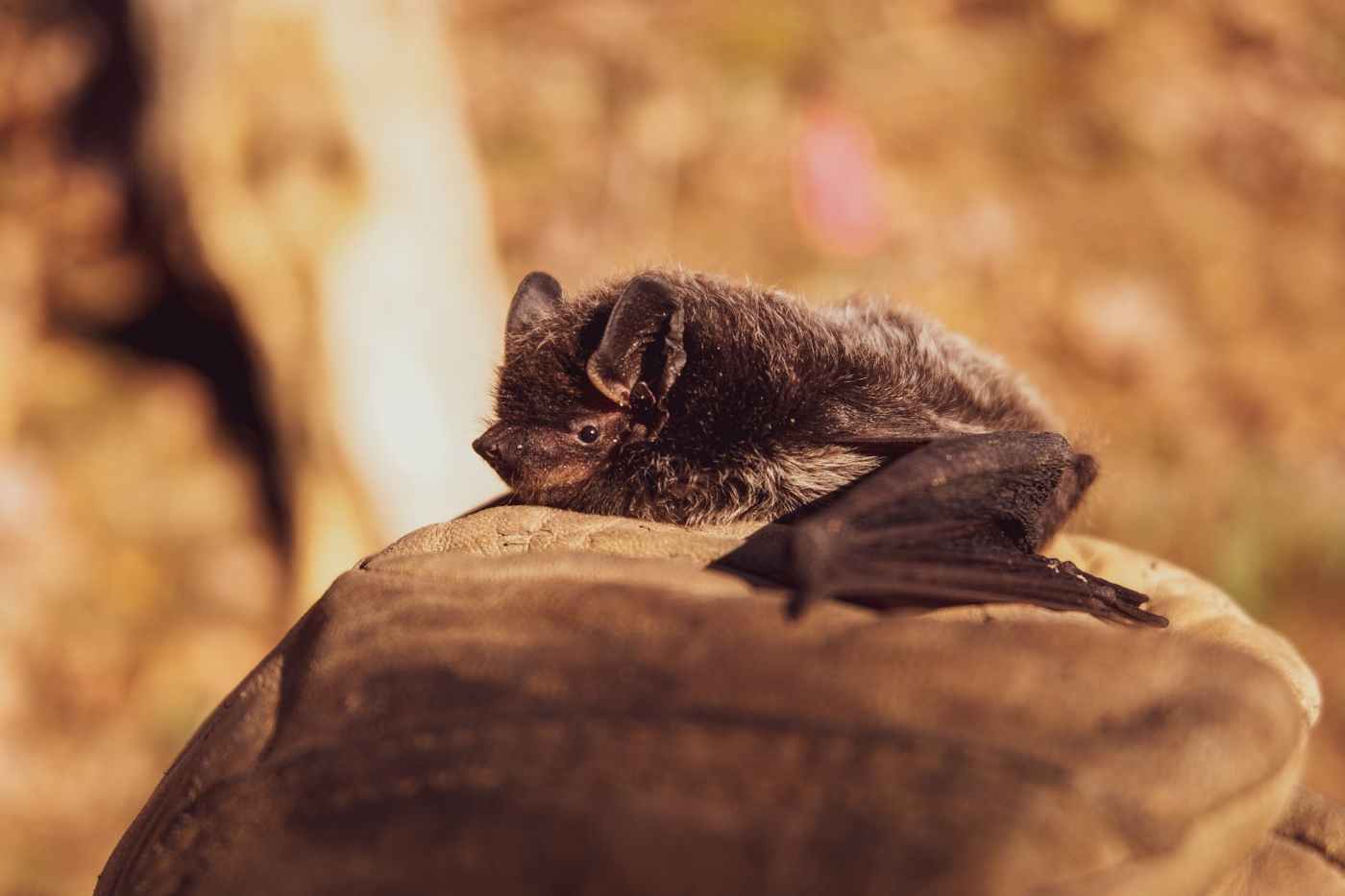
Introduction
Bats, the only flying mammals, have long captivated zoologists with their extraordinary abilities. Their origin, however, remains a puzzle for conventional biologists, who find them appearing suddenly in the fossil record, fully formed as bats, without evolutionary precursors.
In this blog, I want to discuss the fossil evidence, roosting behavior, and sonar technology that will challenge conventional evolutionary explanations. Please share your thoughts in the comment section below.
The Mystery of Bat Origins
In 2006, Karen Sears, an evolutionist, acknowledged the challenge, stating that the earliest known bats, dating back around 50 million years, already possessed the anatomical hallmarks of powered flight.
Evolutionists Gunnell and Simmons echoed this uncertainty, asserting that the phylogenetic and geographic origins of bats remain unknown.
A few years ago, the prevailing belief was that early bats couldn’t echolocate. However, recent findings challenge this notion.
The discovery of the well-preserved fossil bat Vielasia sigei, dating back 50 million years, with a skull supporting early echolocation, contradicts the earlier assumptions. The lack of transitional forms raises questions about the validity of the evolutionary narrative surrounding bat origins.
This challenges the conventional narrative and aligns with the creationist perspective that bats were equipped with modern echolocation from the beginning.
Cave Roosting Behavior
Suzanne Hand’s observation of cave roosting behavior in V. sigei further supports the intelligent design position.
The ability to roost in caves is a sophisticated behavior that enhances their survival, and its presence from the early stages challenges the notion of gradual evolutionary development.
The fact that this behavior was already present 50 million years ago suggests that bats were created with this capability, rather than evolving it over time.
Sonar Technology in Bats and Dolphins
The remarkable similarity in the sonar technology, known as echolocation, between bats and dolphins raises intriguing questions for evolutionary theory.
The gene prestin, critical for echolocation, exhibits a similar sequence in both species.
Evolutionary assumptions about the gene’s history are challenged by Creationists, proposing a common intentional design for this crucial element in two distinct creatures.
Challenges to Evolutionary Explanations
While some scientists argue for evolutionary processes selecting for changes in prestin, the complexity of the entire echolocation system raises doubts about the feasibility of step-wise additions through random mutations.
The Biblical perspective posits that a specific Creator, rather than blind natural processes, is responsible for the intricate design of echolocation in bats and dolphins.
Conclusion
Bats, with their complex abilities and unique features, present a compelling case for creation. The fossil evidence, cave roosting behavior, and shared sonar technology with dolphins challenge conventional evolutionary explanations.
The mystery of bat origins invites further exploration and contemplation, emphasizing the need for open-minded inquiry into the wonders of the natural world.
Bibliography
- Sears, K. et al. (2006). “Development of bat flight.” Proceedings of the National Academy of Sciences. 103 (17): 6581–6586.
- Gunnell, G. and N. Simmons. (2005). “Fossil Evidence and the Origin of Bats.” Journal of Mammalian Evolution. 12 (1–2): 209–246.
- Hand, S. et al. (2023). “A 50-million-year-old, three-dimensionally preserved bat skull supports an early origin for modern echolocation.” Current Biology. 33 (21): 4624–4640.e21.
- Amos, J. (2010). “‘Echoes’ in bat and dolphin DNA.” BBC News. Accessed on news.bbc.co.uk January 26, 2010.
- Li, Y. (2010). “The hearing gene Prestin unites echolocating bats and whales.” Current Biology. 20 (2): R55-R56.
- Black, R. (2020). “Why Bats Are One of Evolution’s Greatest Puzzles.” Smithsonian Magazine. Accessed on smithsonianmag.com April 21, 2020.
 Conform to Jesus
“Bats, with their complex abilities and unique features, present a compelling case for creation. The fossil evidence, cave roosting behavior, and shared sonar technology with dolphins challenge conventional evolutionary explanations.”
the usual complete nonsense from a creationists. That two complete different animals evolved echolocation shows that evolution works quite well when the environment selects for useful attributes.
I always enjoy when christians try to lie about transitional forms, showing just how ignorant they are on fossils are formed.
“The ability to roost in caves is a sophisticated behavior that enhances their survival, and its presence from the early stages challenges the notion of gradual evolutionary development.”
ROFL. Nothing shows this to be “sophisticated” at all. Living in caves has benefits and problems, so your nonsenes fails yet again.
LikeLiked by 2 people