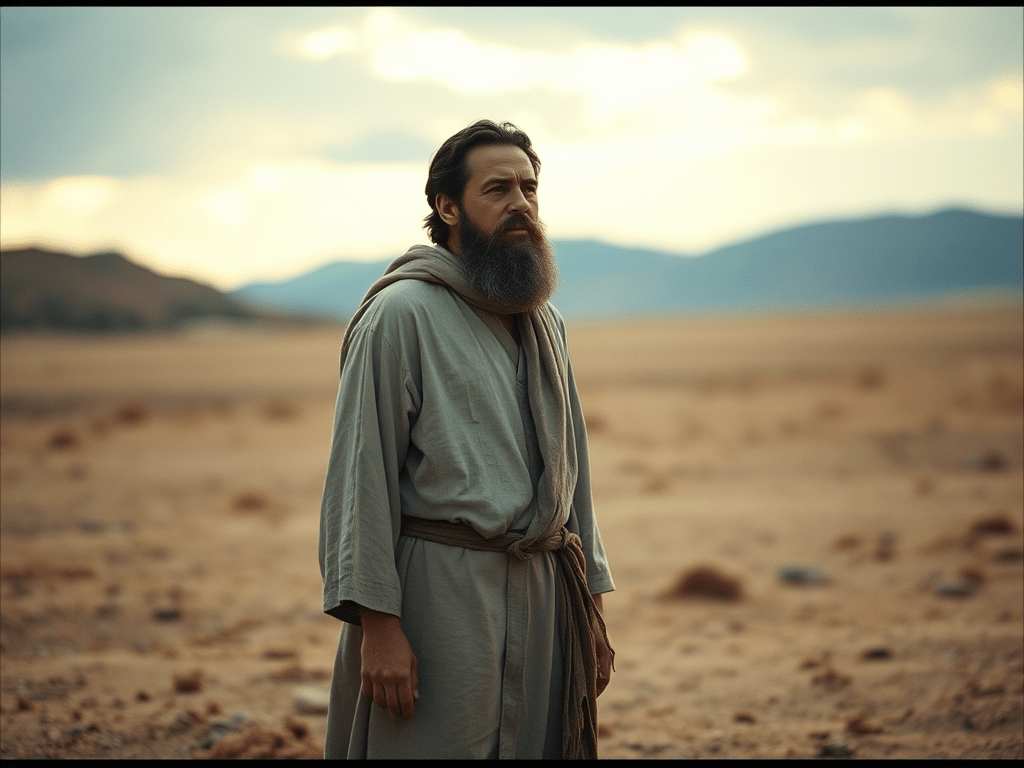
When I enter Jeremiah 16, I enter a chapter of restriction, not release. The Lord speaks to Jeremiah and tells him not to marry, not to participate in funerals, not to attend celebrations. Every normal rhythm of life is withheld from him — not because Jeremiah is unworthy of blessing, but because Jeremiah is separated for a purpose.
This is one of the most painful realities in calling: sometimes God’s preparation looks like exclusion. While others are being chosen, you are being set aside. While others are beginning, you are being withheld. And in this chapter, I hear God speak to Jeremiah words I have felt in my own soul:
“Your separation is not rejection — it is preparation.”
God tells Jeremiah not to participate in relationships or social gatherings because judgment is coming to the land. But the deeper reason is that Jeremiah’s life itself will become a sermon. He will embody the message. His isolation becomes prophecy. When God sets someone apart, He does not do it privately. He does it publicly, visibly, almost painfully. I see myself in Jeremiah. For years, I have wanted to be fully immersed in ministry — preaching, teaching, leading in the traditional pastoral sense — but God did not permit that path, at least not yet.
Instead, He placed me behind a keyboard and a camera, building a website, writing blogs, creating videos. For several years, I’ve poured myself into writing about Jesus — word after word, devotional after devotional — while others were being recognized as pastors, ordained into leadership, or given pulpits. And though I celebrated their success, I wrestled with an ache I didn’t want to admit:
“Why not me, Lord? When is it my turn?”
Jeremiah is told to remain unmarried — not because love is bad, but because God was communicating urgency. My restriction was different, but the emotional weight was similar. I wanted to see my ministry thrive, to be fully launched, to be recognized. I wanted the calling to manifest publicly. But instead, God kept me on the sidelines — at least in the way I measured ministry. I watched others receive opportunities, positions, credit, and microphones. I watched others step into what I longed for — and jealousy quietly knocked on the door of my heart. I reminded myself to rejoice for them, but deep down, I carried the tension Jeremiah carried. I was called, but not released. Gifted, but hidden. Set apart, but not yet sent.
Jeremiah’s isolation was not a punishment. It was a prophetic position. God tells him, “You shall not take a wife… you shall not enter the house of feasting.” (Jer. 16:2, 8). In Hebrew, this is not merely restriction — it is consecration. The word קָדַשׁ (qadash) means to be set apart for holy use. Jeremiah’s loneliness was not abandonment — it was appointment.
When I reflect on my journey, I see this same pattern. Most people do not spend hours writing theology blogs no one sees or editing Jesus-centered videos without an audience. Most people do not sacrifice time, energy, and income to build a ministry platform that doesn’t generate financial return. Most people don’t turn down opportunities for immediate gain because obedience asks for long-term faith. I often felt unusual, different, set apart. I felt like Jeremiah sitting outside the normal flow of life. Others were living, dating, building, socializing — and I was at my computer writing about Christ while the world moved on without me.
Then Jeremiah reaches the moment when the people around him finally notice his abstaining from normal life and ask, “Why has the Lord pronounced all this great disaster against us? What is our sin?” (Jer. 16:10). In that moment, Jeremiah’s separation becomes a testimony. His obedience becomes an answer. His restraint becomes revelation. God tells him, “When they ask, you shall say…” (v. 10). The Hebrew word here for “ask,” שָׁאַל (sha’al), implies a seeking with intensity — to demand an explanation. Jeremiah’s lifestyle provokes questions — not his preaching. This is profound. Sometimes God uses your life, not your words, to confront people with truth.
God reminded me of this in my own calling. There have been seasons where I questioned whether all the hidden faithfulness meant anything. I wasn’t preaching from pulpits. I wasn’t pastoring a church. But I was writing. I was sowing. I was depositing Scripture into the internet week after week, year after year. I didn’t realize it then, but God was forming my voice in obscurity so He could trust me with influence later. He was teaching me Scripture through writing so I could eventually teach people through living.
The chapter shifts into a painful honesty in verse 15. God promises that after discipline, He will restore. This isn’t a restoration back to what was — it is a restoration into something never lived before. God says, “I will bring them back to the land I gave their ancestors.” The structure in Hebrew indicates a completed action God has already decided. God is not considering restoration — He has already planned it.
The turning point of Jeremiah 16 hits a nerve inside me: God promises that people from all nations will know Him because of Jeremiah’s obedience. Not because of Jeremiah’s success. Not because of Jeremiah’s following. Because of Jeremiah’s faithfulness in hiddenness. And I think of my own journey — writing devotions and theology for over a decade with no guarantee of return. I think of the nights I stayed up writing blog posts no one read, investing time into videos that received few views.
I think of the seven-month season when discouragement hit so hard that I stopped writing altogether. I nearly quit my ministry. I told myself it didn’t matter anymore. The enemy whispered that I was wasting my life, that I should focus on something “practical,” something that produced financial security. I nearly believed him.
Then God restored me.
I remember commuting back and forth to medical school in Miami — hours on the road, away from my wife and my children, trying to balance providing for my family with pursuing something bigger. My wife was pregnant. My boys were growing. I was missing moments that mattered. I came home tired, frustrated, and feeling like a failure. And yet, through that season of strain and distance, God drew me closer. He stripped away the illusion that identity comes from accomplishment. He gently whispered that He was not done with me. I did not realize it then, but that season was God forming me in separation so He could use me in proclamation.
Jeremiah feared his set-apart life made him strange. I feared mine made me irrelevant.
Jeremiah’s obedience looked like isolation. Mine looked like obscurity.
But in both cases, God was saying the same thing:
“Your hidden years are not wasted. They are foundational.”
Jeremiah 16 ends with God saying:
“They shall know that My name is the LORD.” (Jer. 16:21)
God did not call Jeremiah to be impressive.
He called Jeremiah to be obedient.
And I feel that deeply now — whether my real estate business succeeds wildly or fails publicly, whether my ministry reaches millions or just a handful of souls, my calling is not validated by visibility. It is validated by surrender. When I write, when I create, when I invest time into developing a ministry nobody else sees — I am being faithful. And faithfulness is success.
I realize now that God never withheld ministry from me —
He withheld platforms from me until I was ready to carry them without making them an idol.
Jeremiah 16 teaches me that:
Being set apart is not punishment.
Being hidden is not rejection.
Being consecrated is not confinement.
It is God preparing the message inside of me before He reveals the message through me.
God is not just preparing my ministry —
He is preparing me.
And when the time is right,
when obedience has matured into surrender,
God will do what He promised:
They will know Him because of how I have lived.
 Conform to Jesus
Leave a comment