Introduction
Revelation 15 provides a profound vision of the heavenly scene before the final outpouring of God’s wrath upon the earth. This chapter serves as a precursor to the seven bowl judgments outlined in the subsequent chapters.
Let’s delve into a verse-by-verse commentary, highlighting key Greek words and related Scriptures. May the Holy Spirit give us wisdom and guidance as we embark upon the Word of God.
Verse 1: “Then I saw another sign in heaven, great and amazing, seven angels with seven plagues, which are the last, for with them the wrath of God is finished.” (ESV)
This verse begins with John witnessing another remarkable sign in heaven, emphasizing the magnitude and significance of what he’s about to witness. Justice, righteousness, and the ultimate sovereignty of God are displayed in these verses.
The Greek word for “amazing” here is θαυμαστός (thaumastos), indicating something astonishing or marvelous. This root word expresses the notion of “awe” and “wonder” reserved for God alone.

There are many examples where this expression is used specifically for the power and holiness of God throughout Scripture:
- Exodus 15:11: “Who among the gods is like you, LORD? Who is like you—majestic in holiness, awesome in glory, working wonders?”
- Psalm 111:2-4: “Great are the works of the LORD; they are pondered by all who delight in them. Glorious and majestic are his deeds, and his righteousness endures forever. He has caused his wonders to be remembered; the LORD is gracious and compassionate.”
- Psalm 145:5-6: “They speak of the glorious splendor of your majesty—and I will meditate on your wonderful works. They tell of the power of your awesome works—and I will proclaim your great deeds.”
- Daniel 4:3: “How great are his signs, how mighty his wonders! His kingdom is an eternal kingdom; his dominion endures from generation to generation.”
- Luke 1:49-51: “for the Mighty One has done great things for me—holy is his name. His mercy extends to those who fear him, from generation to generation. He has performed mighty deeds with his arm; he has scattered those who are proud in their inmost thoughts.”
It’s also reminiscent of Jesus’ words in Matthew 24:30, where He speaks of the Son of Man coming on the clouds of heaven with power and great glory, an event also characterized by awe and wonder. All of these events inspire reverent, worship, and trust in God’s ultimate authority over humanity.

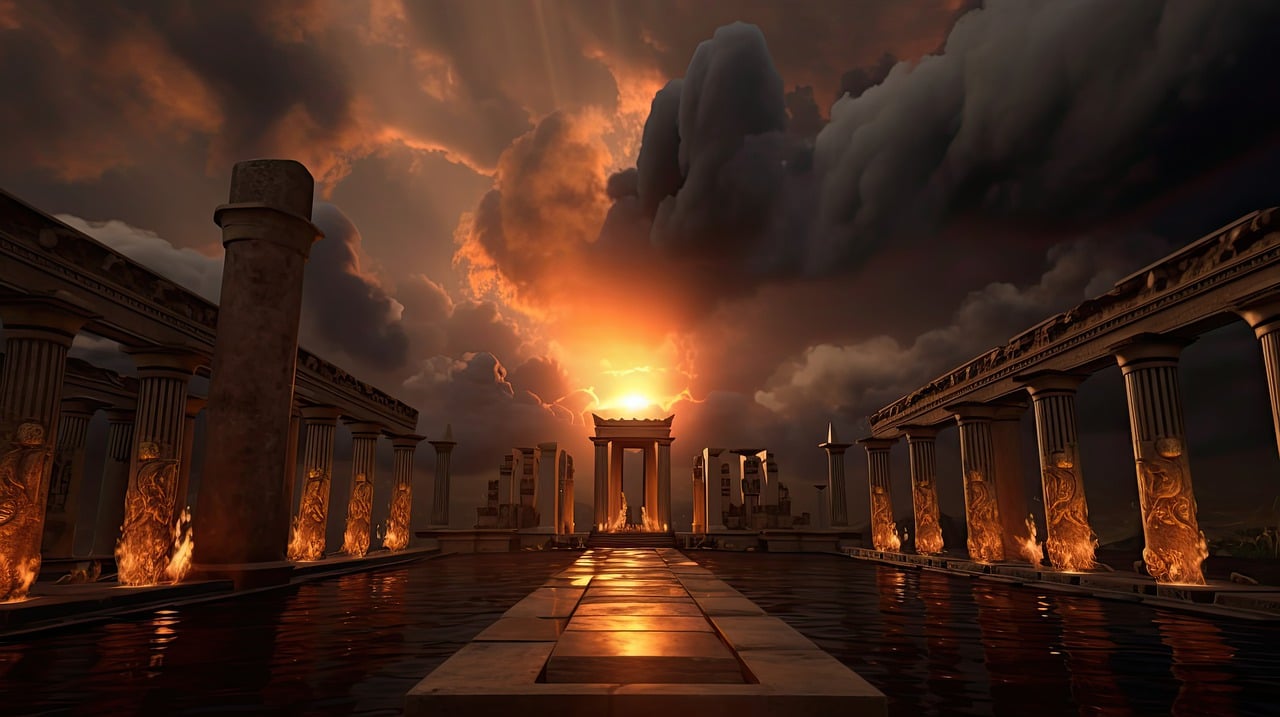
Verse 2: “And I saw what appeared to be a sea of glass mingled with fire—and also those who had conquered the beast and its image and the number of its name, standing beside the sea of glass with harps of God in their hands.” (ESV)
The imagery of a sea of glass mingled with fire portrays both purity and judgment. It draws upon the imagery of the molten sea that is described in Solomon’s temple (1 Kings 7:23-26). It was a large basin that was made of bronze and used for ritual purification.
The victorious saints, who have overcome the persecutions of the Beast, stand before this sea, signifying their purification and redemption. This imagery can be seen in Malachi 3:2-3 and 1 Peter 1:7, where believers are brought through fiery trials and tribulations.
One iconic story is David and his friends Shadrach, Meshach, and Abednego. They were three Jewish men who were taken into captivity in Babylon along with Daniel, and they are best known for their refusal to worship the golden image set up by King Nebuchadnezzar. They were thrown into a fire and there was a son of man that was accompanying them, and they did not perish in the flames but overcame.
The Greek word for “conquered” is νικάω (nikaó), which is also used in Revelation 12:11, where it speaks of believers overcoming the accuser by the blood of the Lamb and the word of their testimony. As Scripture makes clear, we are all conquerors through Christ Jesus (Rom 8:37).
Verse 3: “And they sing the song of Moses, the servant of God, and the song of the Lamb, saying, ‘Great and amazing are your deeds, O Lord God the Almighty! Just and true are your ways, O King of the nations!'” (ESV)
The song of Moses recalls the deliverance of Israel from Egypt (Exodus 15), highlighting God’s faithfulness in salvation. The song of the Lamb celebrates Jesus Christ as the ultimate deliverer and redeemer. The Greek word for “great” is μέγας (megas), echoing the same term used in Revelation 19:1-2, where a great multitude praises God for His salvation and judgment.
From an exegetical perspective, this verse highlights the importance of praise for God’s deeds, acknowledgment of his justice and truth, and the integration of the Song of Moses with praise for the Lamb of God. This narrative demonstrates the continuity of God’s redemptive plan throughout history.
Finally, the phrase “King of the nations” in Revelation 15:3 highlights God’s universal sovereignty (Psalm 22:28), His eschatological fulfillment (Revelation 11:15), and His role as the ultimate authority over human affairs (Psalm 47:7-8).
It underscores the global scope of God’s redemptive purposes (Matthew 28:19) and challenges earthly powers that seek dominance apart from His divine authority (Daniel 4:34-35). As the “King of the nations,” God invites people from all backgrounds to enter His kingdom (Revelation 7:9-10) and experience the blessings of His reign (Psalm 67:4).

Verse 4: “Who will not fear, O Lord, and glorify your name? For you alone are holy. All nations will come and worship you, for your righteous acts have been revealed.” (ESV)
This verse underscores the universal worship and recognition of God’s holiness and righteousness. The Greek word for “holy” is ἅγιος (hagios), which is used throughout the Bible to describe God’s absolute purity and separateness. In Psalm 86:9-10, David prophesies about the nations coming to worship God, a theme reiterated here in Revelation.
Do you recall the Tower of Babel in Genesis 11:1-9? Humanity rebelled against God and tried to build their own way to heaven. God confused the language, and their tower didn’t get very far. However, when Jesus is your mighty tower and refuge, you will succeed. All the nations will come together in unison and clarity, giving ultimate glory to the creator of the universe.
There are so many stories that highlight God’s sovereignty over the nations. Jonah, who was fleeing from God, preached to the people of Nineveh, an outcast group outside of Israel who needed to repent and find God.
In the New Testament, think about the conversion of Cornelius (Acts 10:1-48), who was a Gentile grafted into the family of God just like the rest of us. Moreover, the great commission shows every tribe, tongue, and nation, whether Jew or Gentile, male or female, are going to be one in Christ. For God told us to make disciples of all nations (Matt. 28:18-20).
Verse 5: “After this I looked, and the sanctuary of the tent of witness in heaven was opened,” (ESV)
John’s vision now shifts to the heavenly sanctuary, indicating a pivotal moment in the revelation of God’s judgment. The Greek word for “sanctuary” is ναὸς (naos), which refers to the inner sanctuary or Holy of Holies.
This imagery recalls similar scenes in the Old Testament, such as Isaiah’s vision in Isaiah 6, where he sees the Lord seated on a throne in the temple. Also, Ezekiel sees a vision of God’s glory, describing the throne with the appearance of sapphire, upon with sits the likeness of a human figure radiating brilliance (Ezek. 1:1-28).
Subscribe to get access
Read more of this content when you subscribe today.
 Conform to Jesus
Leave a comment