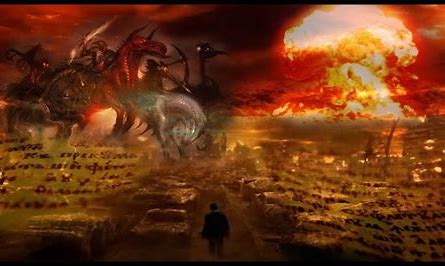
“And he shall be tormented with fire and brimstone in the presence of the holy angels, and in the presence of the Lamb.” (Rev. 14:10)
This is a sobering, convicting, and terrifying passage. The Greek word “πῦρ” (pyr) signifies fire, but in this context, it symbolizes divine judgment and purification. The use of fire conveys the intensity and severity of the punishment awaiting those who have aligned with evil and have not repented of their sins (Matt 4: 17, Lk. 5:32, Lk. 13:3, Acts 17:30, 2 Pet. 3:9).
Furthermore, the torment of those who worship the beast and receive its mark is vividly depicted. The use of “fire and brimstone” evokes imagery of divine judgment and punishment. Throughout Scripture, there are stories of God destroying entire cities, such as Sodom and Gomorrah (Gen. 19), the plagues of Egypt (Ex. 9:23-25), and the Psalmist who writes that the wicked will face “rains of coals, fire, and brimstone for their disobedience.
Dr. Robert H. Mounce, in his commentary on Revelation, highlights the symbolic nature of this imagery, suggesting that it represents the ultimate fate of those who reject God’s sovereignty and choose to follow the ways of the world (Mounce, R. H. (1998). The Book of Revelation (Revised). Wm. B. Eerdmans Publishing).

“And the smoke of their torment ascends up for ever and ever: and they have no rest day nor night, who worship the beast and his image, and whoever receives the mark of his name.” (Rev. 14:11)
The Greek word αἰώνιος (everlasting) emphasizes the eternal nature of the punishment for those who worship the beast. It underscores the idea that their torment will have no end, highlighting the seriousness of the consequences for rejecting God. There are several passages in Scripture that discuss the eternality of Hell. Here are a few from the New Testament.
- Matthew 25:41: Jesus speaks about the final judgment, declaring that the wicked will be cast into “the eternal fire prepared for the devil and his angels.”
- Mark 9:48: Jesus warns about the hellfire where “their worm does not die and the fire is not quenched.”
- Luke 16:19-31: The parable of the rich man and Lazarus portrays the afterlife, with the rich man experiencing torment in Hades and longing for relief.
- 2 Thessalonians 1:9: Paul describes the punishment awaiting those who do not know God and do not obey the gospel of our Lord Jesus, stating they will suffer “the punishment of eternal destruction, away from the presence of the Lord and from the glory of his might.”
- Jude 1:7: Jude refers to Sodom and Gomorrah and the cities around them as examples of those who “indulged in sexual immorality and pursued unnatural desire” and are punished with eternal fire.
Here, the eternal nature of the punishment for those who worship the beast is emphasized. The phrase “for ever and ever” underscores the everlasting duration of their torment, indicating that there will be no respite or relief from their suffering.
Conditional annihilationists interpret passages like Revelation 14:11 in a different light compared to traditional views of eternal conscious torment. Instead of viewing the punishment as eternal torment in a conscious state, they argue that the punishment involves annihilation or the cessation of existence for the wicked.
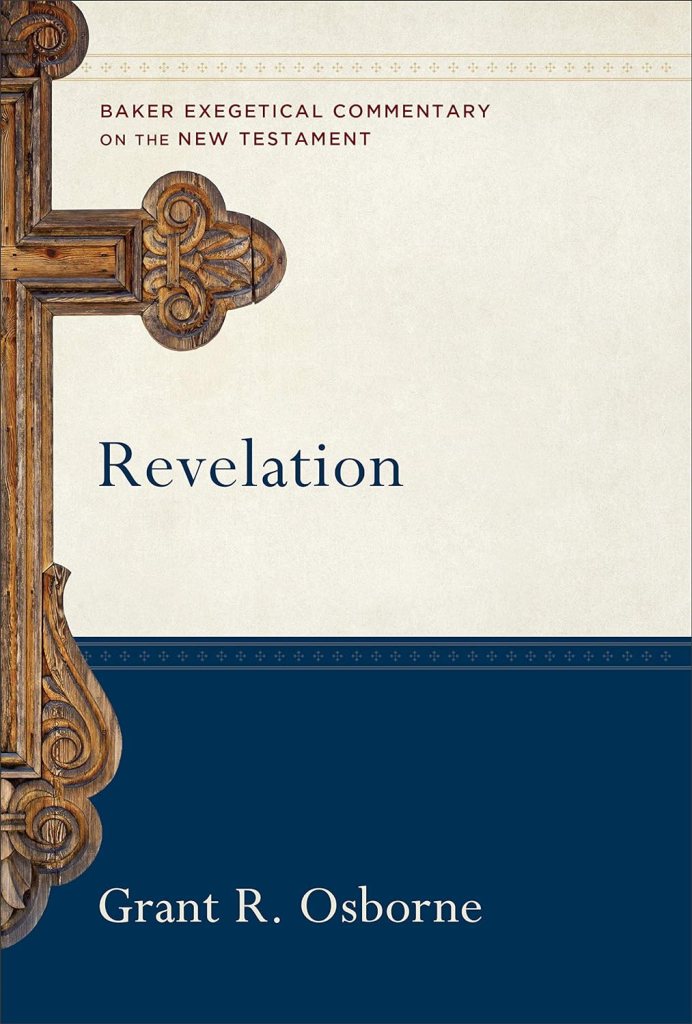
Dr. Grant R. Osborne, in his commentary on Revelation, suggests that this verse serves as a warning against the consequences of succumbing to the pressures of societal conformity and abandoning one’s faith in God (Osborne, G. R. (2002). Revelation. Baker Academic). I have included his book to do more research into this important topic.
“Here is the patience of the saints: here are they that keep the commandments of God, and the faith of Jesus.” (Rev. 14:12)
This verse highlights the perseverance and faithfulness of the saints in maintaining their allegiance to God and Jesus Christ. Despite facing persecution and temptation, they remain steadfast in keeping God’s commandments and holding fast to their faith in Jesus. This perseverance is seen as a testament to their devotion and loyalty to God.
There are several passages of Scripture that discuss the importance of keeping God’s commandments, being patience, and continually trusting in Jesus. For instance, James 1:12 says that the man who endures under trial is blessed, and that your tribulations and labor in the Lord are not in vain (1 Cor. 15:58). Finally, Jesus said to his disciples: “The one who endures until the end will be saved” (Matt. 24:13).
When you read through the Ketuvim, you will find the story of Job. This historical narrative illustrates perseverance and faithfulness in the face of extreme suffering and adversity. Despite losing his wealth, health, and family, Job remains faithful to God, declaring, “Though he slay me, yet will I hope in him” (Job 13:15, NIV). Job’s steadfastness in maintaining his integrity and trust in God serves as a powerful example of endurance in trials.
I am also reminded of Hannah’s great faith and trust in God despite her years of barrenness and ridicule from others. She continues to rely on God’s love and sovereignty, praying for a child. Her persistence and faith finally leads to the birth of Samuel, whom she dedicates to God’s service.
“And I heard a voice from heaven saying unto me, Write, Blessed are the dead which die in the Lord from henceforth: Yea, saith the Spirit, that they may rest from their labours; and their works do follow them.” (Rev. 14:13)
The Greek word εὐλογημένοι (blessed) conveys a sense of divine favor, happiness, and well-being. It signifies the fortunate and privileged state of those who die in the Lord. As believers, we have hope in the resurrection. For Jesus proved that he conquered death and hell by rising again from the dead.
In 2 Corinthians 5:8, Paul expresses confidence that to be absent from the body is to be present with the Lord, affirming the hope of believers in experiencing eternal rest and communion with God after death. Furthermore, in the context of the new heaven and new earth, John describes the future state where God will wipe away every tear from the eyes of His people, and there will be no more death, mourning, crying, or pain, signaling the ultimate rest and comfort for believers (Rev. 21:4).
This verse offers comfort and assurance to believers, particularly those facing persecution and martyrdom. It declares the blessedness of those who die in the Lord, affirming that they will find rest from their labors and that their righteous deeds will be remembered and rewarded by God. It underscores the hope and consolation found in the promise of eternal life for those who remain faithful to the end.
Jesus tells us that we are not to store up treasure here on the earth, where rust and moth can destroy. But instead, we ought to store up our treasures in heaven where no one can steal or take away. Our spiritual relationship with God is the only substance that can’t be destroyed. It is therefore the most precious treasure we have: a personal relationship with God.
People put all their effort into worshipping money, fame, fortune, and even their health, but all of that is temporary. None of us will be able to take our luxurious homes or fancy cars to the grave. True wealth comes from knowing the Lord.
“And I looked, and behold a white cloud, and upon the cloud one sat like unto the Son of man, having on his head a golden crown, and in his hand a sharp sickle.” (Rev. 14:14)
In this verse, John describes a vision of the Son of Man, a title often associated with Jesus Christ, seated on a white cloud with a golden crown on his head and a sharp sickle in his hand. The imagery evokes the image of divine authority and judgment, with the Son of Man appearing as a triumphant and powerful figure.
The use of the term “like unto” underscores the similarity between the figure John sees and the glorified Christ, emphasizing his divine nature and sovereignty over all creation. Moreover, the sickle symbolizes the harvest of the earth in the valley of decision and is in reference to Joel 3:13 where God will separate the righteous from the wicked.
You can also recall in the New Testament where Jesus’s parable of the wheat and the tares demonstrate this divine judgment (Matt. 13:24). He will gather the wheat into his barn, but the chaff or the tares will be thrown into the fire. This imagery should evoke a sense of urgency to repent and also share the gospel with unbelievers. For God is not willing that anyone perish but all come to repentance and faith.
And another angel came out of the temple, crying with a loud voice to him that sat on the cloud, Thrust in thy sickle, and reap: for the time is come for you to reap; for the harvest of the earth is ripe.” (Rev. 14:15)
Here, another angel emerges, urging the figure on the cloud, likely Jesus Christ, to reap the harvest of the earth. This Greek word θερίζειν (reap) denotes the action of harvesting or gathering crops, symbolizing the gathering of souls for judgment.
Isaiah prophesies about the judgment of the nations, using the metaphor of reaping and harvesting. He describes the day of reckoning when people will flee like chaff blown by the wind, and only a few survivors will remain. Also, Jeremiah prophesies about the destruction of Babylon, using the imagery of reaping and threshing.
He describes the time when Babylon will be harvested like wheat and crushed like grain on the threshing floor. This imagery reflects the concept of divine judgment and the eventual downfall of the wicked at the end of the age.
“And he that sat on the cloud thrust in his sickle on the earth; and the earth was reaped.” (Rev. 14:16)
In this verse, Jesus Christ thrusts his sickle upon the earth and initiates the harvest of souls for judgment. The word thrust in the Greek original language is ἔβαλεν, and it signifies the action of throwing or casting something in a forceful and swift way. It’s clear here how abrupt and sudden judgment will be on the day of the Lord’s return.
Furthermore, the fact that there is another angel with a sharp sickle to express divine judgment illustrates the absolute judgment that will be carried out. This repetition continues to reinforce the finality of judgment and how God is patiently waiting for all of us to repent and trust in Him.
“And another angel came out of the temple, which is in heaven, he also having a sharp sickle.” (Rev. 14:17)
Here, another angel emerges from the heavenly temple, wielding a sharp sickle. The presence of this angel continues to underscore the divine orchestration of judgment, as multiple heavenly beings are involved in executing God’s will. The sharp sickle symbolizes the swift and decisive nature of judgment, emphasizing the inevitability of divine justice.
Moreover, the apostle Paul emphasizes the importance of seizing opportunities for evangelism in Colossians 4:5-6, urging believers to make the most of every opportunity and to let their conversation be always full of grace and seasoned with salt. It’s absolutely critical to spread the gospel message because how will they repent if they don’t hear the truth?
Believers today are called to be faithful and diligent in advancing the kingdom of God. This involves actively participating in God’s mission to reconcile the world to Himself. Paul encourages believers to be steadfast, immovable, and always abounding in the work of the Lord, knowing that their labor is not in vain (1 Corinthians 15:58).
Do not give up. Continue to share the gospel with your family, friends, neighbors, and co-workers. While I know it can be tempting to avoid these spiritual discussions, it’s really a monumental decision to do so. We are talking about an eternity separated from God; that’s a serious matter and there is no comparison to it.
Subscribe to get access
Read more of this content when you subscribe today.
 Conform to Jesus
Leave a comment